

The track & the section
Signal Book (Appendix 4, Railway Traffic Regulations)
Slow sample tempo: one cycle per 1,6 second. This is not a representation of the exact practice frequency. You can pause all animations at the top.
Animations are frozen.
Text updated to Appendix 4, version 1 January 2026. View the current official signal book.
Appendix 4 — text version 1 January 2026. Official source: Rail Traffic Regulations
1 General
1.1 Definitions
In this appendix, the following is understood to mean:
- green variant: the signals 201, 202, 206a and 206b;
- local speed: the maximum speed indicated by a speed sign 314 or 316;
- driving on sight: driving at such a speed, not exceeding 40 kilometers per hour, or so much less at a lower local speed limit, that in the event of an occupied track or other recognizable danger, a timely stop can be made at any point;
- speed indication: speeds are indicated by numbers in signals, where applies: speed is number x 10 kilometers per hour;
- speed limit: instruction to reduce speed to the indicated speed and permission to drive at a maximum of the indicated speed;
- temporary speed limit: temporary restriction on the local speed.
1.2 Permissions and instructions
The signals listed in this appendix give authorizations and/or orders.
Instructions to limit speed are given at such a distance that the instruction can be executed in time. Timely means that the available braking distance is sufficient to reach the instructed lower speed.
With regard to lowering or raising the speed, the following applies:
- a speed reduction must be initiated when the first vehicle passes the signal ordering a speed reduction;
- A speed increase may only be carried out once the last vehicle has completely passed the signal allowing a speed increase.
2 Signal lights
2.1 Main signals
| No. / Signal | Image | Meaning |
|---|---|---|
| No. 201 High-placed green light |  | Driving is permitted at the local speed limit. If the local speed limit is unknown at the time of departure, driving is permitted at a speed of no more than 40 kilometers per hour. |
| No. 202 High-mounted flashing green light with a number formed by white light | Driving is permitted at a maximum speed of the indicated. | |
| No. 206a/b High-mounted flashing green light or low-mounted green light | 206a (high-mounted flashing green light): driving permitted at a speed of no more than 40 kilometers per hour. 206b (low-placed green light): driving is permitted at a speed of no more than 40 kilometers per hour or the lower speed applicable locally. | |
| No. 209 High-mounted yellow light with a number formed by flashing white light | Limit speed to the indicated speed. This speed may not be reached at the next main signal in all situations. In those situations, braking must not be interrupted if the next main signal instructs a further limitation of speed. | |
| No. 210 High-placed yellow light with a number formed by white light |  | Limit speed to the indicated speed. This speed must be reached before the next main signal. |
| No. 212a/b High or low placed yellow light |  | 212a (high-mounted yellow light): Limit speed to 40 kilometers per hour or lower, to be able to stop before the next signal meaning ‘stop’. 212b (low yellow light): Proceed to drive at a maximum of 40 kilometers per hour, or the lower speed applicable locally, in order to stop before the next signal meaning ‘stop’. |
| No. 214a/b High or low placed yellow flashing light | Driving by sight. | |
| No. 215a/b High or low placed red light |  | Stop before the signal. |
| No. 216a/b High or low placed white light |  | Signal deactivated by an operating action. Proceeding permitted after obtaining permission to shunt. |
2.2 Advance signals
| No. / Signal | Image | Meaning |
|---|---|---|
| No. 217a/b High-placed green light: a. with a background screen with three or four right angles; b. without background screen with a advance warning board 291b underneath. |  | Driving is permitted at the local speed limit. A prior instruction to ‘Drive on sight’ remains in effect. |
| No. 218a/b High-placed yellow light with a number formed by white light: a. with a background screen with three or four right angles; b. without background screen with a advance warning board 291b underneath. |  | Limit speed to the indicated speed. This speed must be reached before the next main signal. A prior instruction ‘Drive on sight’ remains in effect. |
| No. 219a/b High-mounted yellow light: a. with a background screen with three or four right angles; b. without background screen with a advance warning board 291b underneath. | 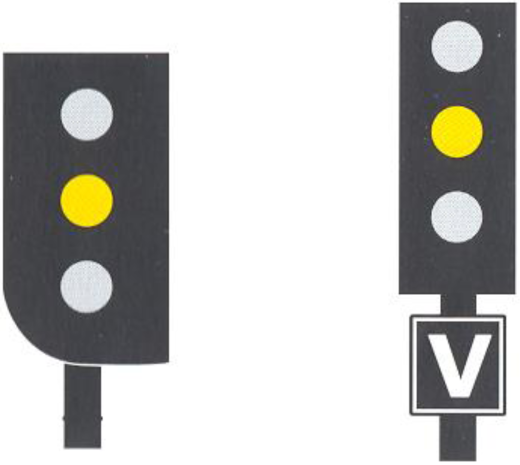 | Limit speed to 40 kilometers per hour or lower, in order to be able to stop before the next signal with the meaning ‘stop’. A prior instruction ‘Drive on sight’ remains in effect. |
2.3 Light signals with signs with a black triangle
| No. / Signal | Image | Meaning |
|---|---|---|
| No. 222 High-mounted yellow light with: – a background screen with straight or rounded corners, and – underneath a white square board with a black triangle with the point upwards |  | Limit speed to 40 kilometers per hour or lower, in order to be able to stop before the next signal with the meaning ‘stop’. A prior instruction ‘Drive on sight’ remains in effect. |
| No. 215a High or low placed red light with a square white board with a black triangle with the point upwards |  | Stop before the signal. |
| No. 221 High-mounted white light with: – a background screen with straight or rounded corners and below it – a white square board with a black triangle with the point facing up | Driving permitted. Indication of a subsequent signal no. 220a/b emitting white light. A prior instruction ‘Drive on sight’ remains valid. | |
| No. 220a/b High or low placed white light with a square white board with a black triangle with the point upwards. |  | Overtaking is permitted. The facility behind the signal is safe to drive on. A prior ‘Drive on sight’ instruction remains in effect. |
3 Speed signs
| No. / Signal | Image | Meaning | |
|---|---|---|---|
| No. 313 speed reduction sign |  | Limit speed to the indicated speed. This speed must be reached before the next sign No. 314. Driving at the indicated speed is permitted if a green variant was previously shown. | |
| No. 314 Speed limit sign |  | Indication of the local speed limit applicable past the sign. Increasing speed to an indicated speed higher than 40 kilometers per hour is only permitted if a green variant was shown beforehand. | |
| No. 316 Speed limit sign |  | Indication of the local speed limit applicable beyond the sign. Increasing speed to an indicated speed higher than 40 kilometers per hour is only permitted if a green variant was shown beforehand. | |
| No. 324 Speed limit sign Level crossing / Weighbridge |  | The speed indicated by the number must not be exceeded until: a. the front of the train has passed the level crossing; or b. the entire train has passed the weighbridge. | |
| No. 325a ‘L’ sign | Day | Night, two synchronously flashing yellow lights | Indication of a temporarily reduced local speed. |
| No. 325b Temporary speed limit sign | 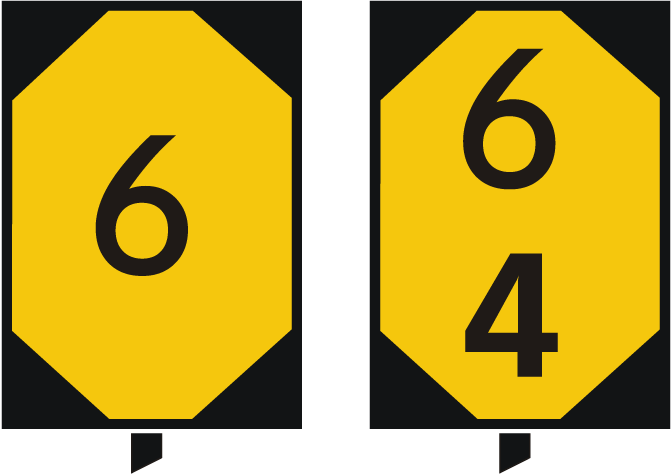 | Limit speed to the speed indicated by the number, provided that in the case of a sign with two numbers: • the lower number applies to trains intended for the carriage of goods and with a speed lower than 120 kilometers per hour and to single locomotives; and • the top number for the other trains. | |
| No. 326a ‘A’ board | Day | Night (a flashing yellow light) | Indication of the beginning of a track section for which a temporary speed restriction applies according to the preceding temporary speed sign. |
| No. 327a E-board | 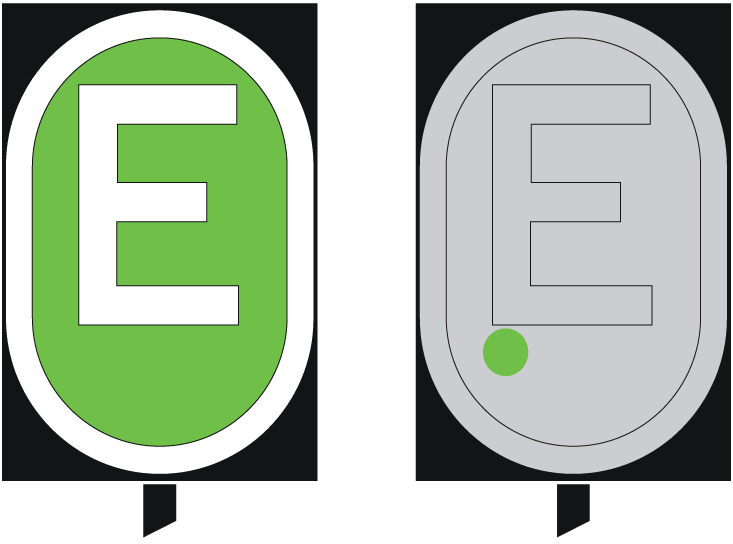 | Indication of the end of a track section to which the temporary speed restriction applies. | |
4 Additional signals
4.1 Direction indicator and repeater signal
| No. / Signal | Image | Meaning |
|---|---|---|
| No. 252 Direction sign |  | Indication of the destination of the established roadway. |
| No. 272 Diagonal repeat signal |  | Indication that the next signal emits a signal aspect other than flashing red or yellow light. |
| No. 273 Horizontal repeater signal |  | Indication that the next signal emits red light or flashing yellow light. |
4.2 Signs on traffic lights
| No. / Signal | Image | Meaning |
|---|---|---|
| No. 291a Level crossing emergency control sign |  | Indication of a signal light with a device to close the level crossing in the event of a malfunction. |
| No. 291b Advance signal board | 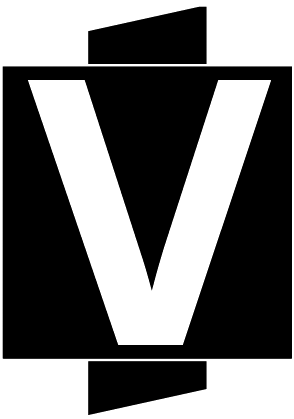 | Indication of a distant signal without a background screen. |
| No. 291c P-board |  | Indication of a P-signal. |
4.3 Beacon
| No. / Signal | Image | Meaning |
|---|---|---|
| No. 249 Beacon |  | Indication of the approach of a distant signal. |
| No. 249a Keverbaken | 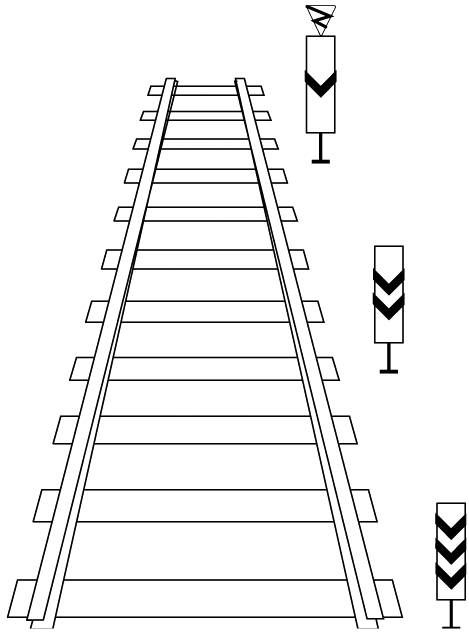 | Limit speed to 40 kilometers per hour or as much less as necessary to be able to stop before the next ‘stop’ signal. |
| No. 251 Reflector plate |  | Indication of the approach to a light signal or a stopping point marking no. 227a or no. 227b’. |
| No. 251a/l Sign ‘Special hazard point’ |  | Indication of a point of particular danger located behind the signal light. |
| No. 251a/II Yellow beacons |  | Indication of the approach of a signal light that precedes, at least at the braking distance, a signal light equipped with a special hazard point sign no. 251a/l. |
| No. 251b Rectangular reflector plate with diagonal stripes |  | Indication of the approach to a P signal preceding a main signal without a P. |
5 ATB signals
5.1 ATB track signals
| No. / Signal | Image | Meaning |
|---|---|---|
| No. 328a ATB approach sign | 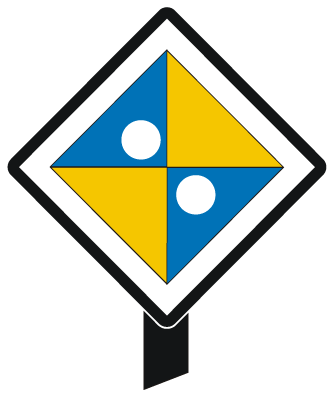 | Indication of the approach to the board ‘Nr. 328 ATB-switching board’. |
| No. 328 ATB switch-on board |  | Indication of the start of the activation section of the automatic train control system ATB. |
| No. 328b ATB code board | 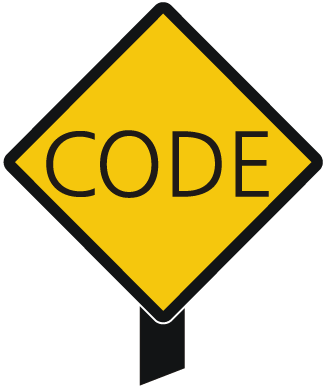 | Indication of the beginning of an area secured by ATB or ATBNG, or the transition between these areas. |
| No. 329 ATB shutdown board |  | Indication of the end of the area where the automatic train control system ATB or ATBNG operates. |
| No. 330 ATB code change signal (white light) | 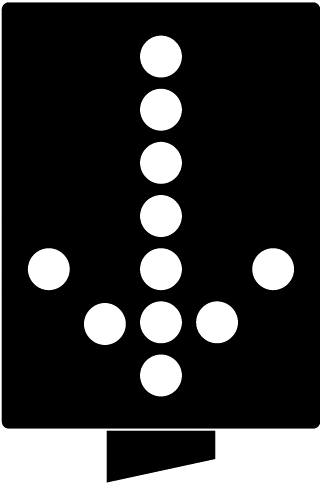 | Indication of the display of a cab signal imposing a speed limit. |
5.2 ATB cab signals
| No. / Signal | Image | Meaning |
|---|---|---|
| IF FIXED SIGNALS OR ‘L’, ‘A’, AND ‘E’ BOARDS IMPOSE A LOWER SPEED THAN THE ATB CABIN SIGNALS, THAT LOWER SPEED MUST BE MAINTAINED. | ||
| no. 801 Green light/green light with speedometer |  | Driving is permitted at the speed indicated by the fixed signals. |
| No. 802 Yellow light | 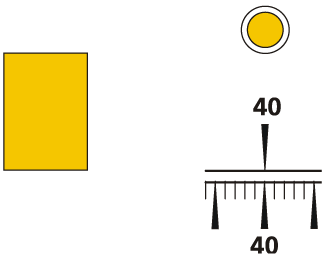 | Limit speed to 40 kilometers per hour |
| No. 803 Yellow with number/speedometer |  | Limit speed to the speed indicated by signs and traffic lights. |
| No. 804 White light |  | Indication of compliance with the ATB braking criterion. |
| No. 805 Blue light | 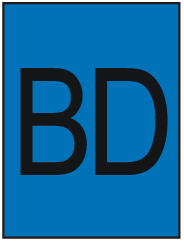 | Indication that the automatic train protection system is out of service. |
| No. 806 Red light |  | Indication of braking initiated by the automatic train protection system. |
| No. 807 One gong strike | Modification of cab signal. | |
| No. 808 More gong strikes | ATB switches to ‘Out of service’. | |
| No. 809 Continuous ringing signal | The speed commanded by the ATB is exceeded. | |
| No. 810 5 seconds ring signal | The speed assigned by the ATB New Generation is exceeded. | |
| No. 811 Short bell signals | The speed commanded by the ATB has been reached. | |
| No. 812 Buzzer | Receipt | |
| No. 813 Electric vision |  | Speed limit advance warning. The speed must be limited to the speed displayed on the ‘target speed’ screen at a distance indicated on the ‘target speed distance meter’. |
6 Signals for tunnels and steep slopes
| No. / Signal | Image | Meaning |
|---|---|---|
| No. 276 'L' signal |  | Limit speed such that it is possible to stop before the next H-signal ‘Nr. 277’. Applies only to drivers of trains intended for the carriage of goods, which trains have been designated by the railway undertaking concerned. |
| No. 277 'H' signal |  | Stop for the signal. Applies only to drivers of trains intended for the carriage of goods, which trains have been designated by the railway undertaking concerned. |
| No. 278 Flashing white 'X' | Limit speed in such a way that a stop can be made before the next signal ‘Nr. 279 White ‘X’’ or a light signal emitting red light. Applies only to drivers of trains intended for the carriage of goods and of trains designated by the railway undertaking concerned. | |
| No. 279 White 'X' |  | Stop before the signal. Applies only to drivers of trains intended for the carriage of goods and of trains designated by the railway undertaking concerned. |
| No. 280 White 'G' |  | Passing is permitted subject to observance of the corresponding traffic lights and speed must be limited in such a way that the speed indicated by the next signal ‘Nr. 281 Entry Speed Board’ is not exceeded. Applies only to drivers of trains intended for the carriage of goods and of trains designated by the railway undertaking concerned. |
| No. 281 Entry speed limit sign |  | Driving is permitted at the start of the tunnel or on a descending slope at the speed indicated by the number. Applies only to drivers of trains intended for the carriage of goods and of trains designated by the railway undertaking concerned. |
| No. 282 Advisory speed sign |  | Indication of the recommended speed indicated by the number that the driver should attempt to maintain. Applies only to drivers of trains intended for the carriage of goods and of trains designated by the railway undertaking concerned. |
| No. 282a Advisory speed sign |  | Indication of the recommended speed indicated by the number that the driver should attempt to maintain. Applies only to drivers of trains intended for the carriage of goods and of trains designated by the railway undertaking concerned. |
| No. 286 Entry speed reduction sign |  | Limit speed to the speed indicated by the number. This speed must be reached at the next signal ‘Nr. 281 Entry Speed Board’. Applies only to drivers of trains intended for the carriage of goods and of trains designated by the railway undertaking concerned. |
7 Signals with stop commands
| No. / Signal | Image | Meaning | |
|---|---|---|---|
| No. 300 Stop sign | Stop before the sign. You may proceed after contacting and obtaining permission from the official listed on the supplementary sign. If the supplementary sign lists multiple instructions, these must be carried out before the sign may be passed. | ||
| No. 300a Stop sign with lit white light | Stop before the sign. You may proceed after contacting and obtaining permission from the official listed on the supplementary sign. The points behind the signal are in the position indicated by the point signal, signal number 253a/b. | ||
| No. 300b Stop sign with off lamp | Stop before the sign. You may proceed after contacting and obtaining permission from the official listed on the supplementary sign. The points behind the signal must be operated locally. | ||
| No. 301 Stop sign |  | Stop before the sign and carry out the instruction stated on the supplementary sign. If no instruction is stated, you may continue driving after stopping. | |
| No. 301b Optional stop sign | 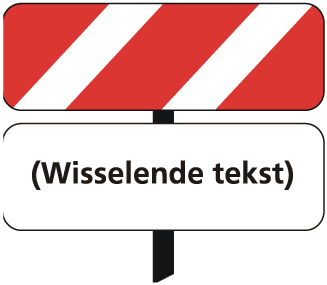 | Stop before the sign. Proceed after contact with and permission from the official listed on the supplementary sign. If permission has been obtained in advance, signal 301b may be passed without stopping. | |
| No. 301c Stop sign with lit white light |  | Stop at the board and carry out the instruction stated on the sub-board. The illuminated white lamp means that the points behind the signal are in the correct position for the requested route and are safe to pass. | |
| No. 301d Stop sign with off lamp |  | Stop in front of the board and carry out the instruction stated on the sub-board. The extinguished white lamp means that the points behind the signal must be operated locally. | |
| No. 301e Optional stop sign with illuminated white lamp | 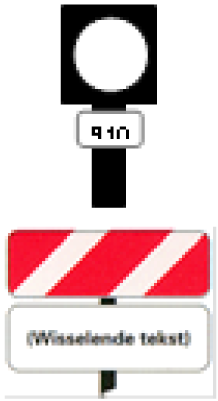 | Stop before the sign, unless the instruction stated on the supplementary sign has been carried out. The points behind the signal are in the position indicated by the point signal, signal number 253a/b. | |
| No. 301f Optional stop sign with extinguished lamp |  | Stop before the sign, unless the instruction stated on the supplementary sign has been carried out. The points behind the signal are operated locally. | |
| No. 242 Stop signal lantern/board |  | Stop before the signal. Does not apply to drivers of shunting trains. | |
| No. 302 ‘R’ sign | 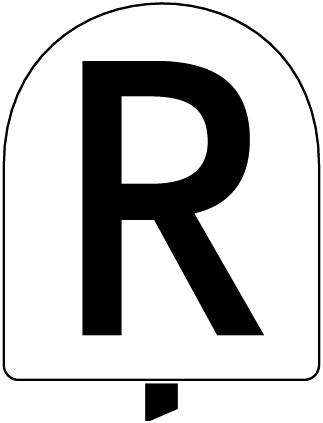 | Stop before the signal. Applies only to drivers of shunting trains. | |
| No. 322 US board |  | Stop before the signal, unless the driver is in possession of a valid Wrong Track instruction for the track concerned. | |
| No. 513 Closing sign | Day | Night (red light or reflective) | Stop before the signal. |
 | |||
| No. 243 Closure lantern/sign |  | Stop before the signal. If the signal is placed on a movable bridge, stop before the bridge. Optionally, the board at a bumper is double-sided and/or equipped with a red light. | |
| No. 244a/b Safe closing lantern |  | The facility(ies) behind the signal are safe to drive on. | |
| No. 512b Red light or red flag or red luminous bar |  | Stop before the signal | |
| No. 331 Block board |  | Stop before the signal, unless the train dispatcher has given prior permission to pass the signal. | |
| No. 375 Assignment board | Carry out the instruction stated on the supplementary sign before driving past the sign. This sign is used, among other places, at locations where road traffic takes place and the train driver must operate a level crossing. | ||
8 Signals for rail vehicles with pantographs
| No. / Signal | Image | Meaning |
|---|---|---|
| No. 306a Switch-off board | 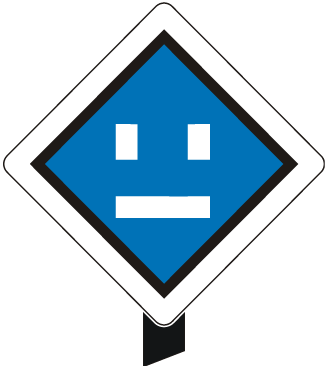 | Switch off traction current. |
| No. 307a Switchboard | 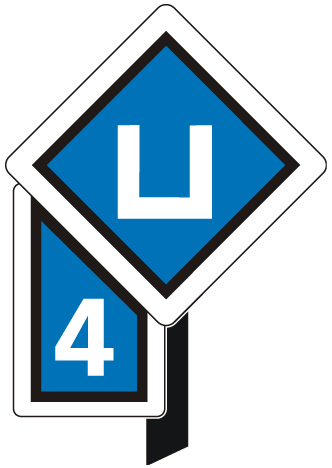 | Switching on traction current is permitted. If a supplementary sign has been installed, the following applies: -for hauled trains: The traction current may only be switched on if the number of electric locomotives does not exceed the number indicated on the supplementary board and -for other trains: Traction current may only be switched on if the train does not exceed the train length indicated on the supplementary board. |
| No. 308a Sign ‘Purchase purchasers down’ | 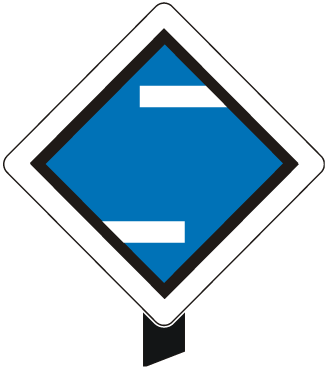 | Announcement to lower pantographs. |
| No. 309a Sign ‘Put down power consumers’ |  | Current consumers must be lowered. |
| No. 309c Sign ‘Purpose collectors down’ at carriage wash facility | 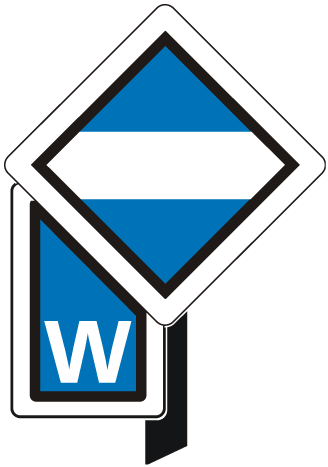 | The pantographs must be lowered when using the washing facility. |
| No. 310a Sign ‘Power consumers on’ |  | Permission to install the pantographs. If a supplementary sign has been installed, the following applies: -for hauled trains: Traction current may only be switched on if the number of electric locomotives does not exceed the number indicated on the supplementary board. -for other trains: Traction current may only be switched on if the train does not exceed the train length indicated on the supplementary board. |
| No. 311(l/r) Sign ‘End of overhead line’ |  | Passing with raised pantographs is not permitted. If an overhead sign is displayed, passing with raised pantographs is not permitted in the direction indicated by the arrow. |
| No. 320 Indication of high voltage switching location |  | Indication of the overhead line voltage beyond the following sign ‘Nr. 310a Pantographs on’. This overhead line voltage is indicated on the bottom board. |
9 Signals on power and other rail vehicles
| No. / Signal | Image | Meaning |
|---|---|---|
| No. 401 Headlights |  | When using the main railway line, considering the direction of travel, the train is equipped with • three burning white or yellow lights at the front; • when using the high-speed rail system, three illuminated white lights at the front. If train sets are coupled while using the main railway line, the lighting at the coupling point is switched off. |
| No. 401b pushed train | 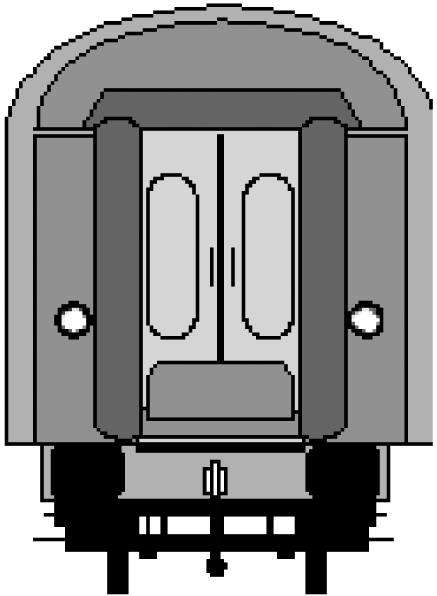 | Historic vehicles that traditionally cannot display the A configuration of the front signal arrangement may also display an L configuration. Exclusively for historic vehicles not equipped for this purpose, during pushed shunting, two forward-facing white lights at the same height on the lead vehicle of a pushed train. |
| No. 401c Train and locomotive in a railway yard |  | A motor vehicle shall be equipped with a burning white light at the front and at the rear exclusively within a railway yard when operating on a main railway line. The requirement to be equipped with at least one burning white light at the front and at the rear does not apply during the period that a locomotive or a train is parked on a main railway line within a railway yard. |
| No. 413 Two red lights with one, two or three white lights |  | Stop due to danger. |
| No. 401d Two white lights flashing alternately or simultaneously at the front | Stop due to danger. | |
| No. 403 closing signals | For trains: Two illuminated, flashing or non-flashing, red lights at the rear or two shields (403-1, 403-2 or 403-5). In international traffic, the shields must comply with the model from the TSI-OPE. | |
| No. 403 Closing signals (continued) |  | For trains of the high-speed rail system while using the main railway: Two illuminated red lights at the rear (403-1). |
| No. 403 Closing signals (continued) | For trains on a decommissioned track: A lit, whether or not flashing, red light at the rear (403-3 or 403-4). | |
| No. 403 Closing signals (continued) | For trains not intended for the transport of persons: The rear is equipped with a burning, flashing or non-flashing, red light or two shields (403-3, 403-4 or 403-5). | |
| No. 403-6 International locking plate |  | In international traffic, the shields must comply with the model from the TSI-OPE (section 4.2.2.1.3.2). Two reflective plates with white triangles on the sides and red triangles at the top and bottom. |
| No. 410 Yellow flag(s) |  | Do not shunt or jettison against the rail vehicle. |
| No. 412a Red rotating / flashing / strobe light | Indication of a train to road traffic. |
10 Brake test signals
| No. / Signal | Image | Meaning |
|---|---|---|
| No. 702a Brakes stuck | A blue light or a gesture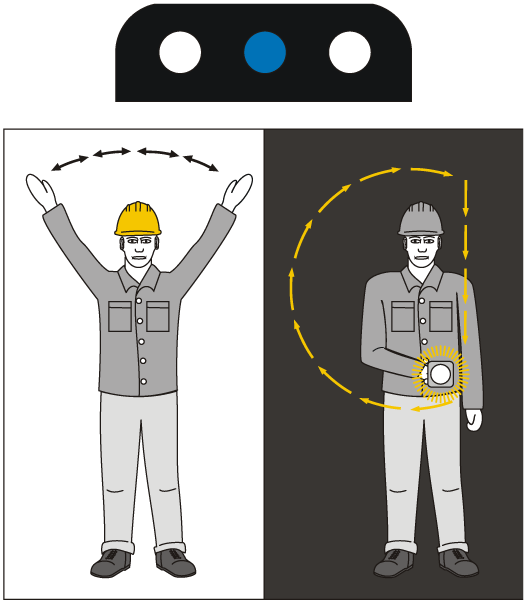 | Brakes stuck. |
| No. 702b Release the brakes | Two blue lights or a gesture | Release the brakes. |
| No. 702c Brakes in order | Three blue lights or a gesture. | Brake test passed. |
11 Departure signals
| No. / Signal | Image | Meaning |
|---|---|---|
| No. 706 Departure signal light |  | Permission to start the departure procedure. |
| No. 700 Flashing departure signal light White flashing light with a V underneath | Permission has been granted to start the departure procedure. |
12 Other fixed signals
| No. / Signal | Image | Meaning |
|---|---|---|
| No. 305 Exploration board |  | Indication of the approach to a platform for passengers at braking distance. |
| No. 312 Whistle board |  | Give an audio signal in accordance with signal ‘Nr. 605 A moderate long tone’. |
| No. 312a Optional whistle board |  | Give an audible signal in accordance with signal ‘Nr. 605 A moderate long tone’, if persons approach the crossing. |
| No. 253a/b Switch signal |  | Indication of the position of the switch: a. leading left, and b. legally binding. |
| No. 274 Weighbridge signal around |  | Driving on the weighbridge is permitted at the speed applicable to that bridge in accordance with signal ‘Nr. 324 Speed Sign Level Crossing/Weighbridge’. |
| No. 275 Triangular weighbridge signal |  | Driving on the weighbridge is permitted at the local speed limit. |
| No. 350 Attention sign ‘Light signal(s) out of service’ |  | Indication of one or more following signal lights in accordance with ‘No. 351 Crossed signal light’ which are extinguished where possible. |
| No. 351 Crossed signal light |  | Indication that the light signal has no meaning. |
| No. 317 Sign ‘Drive by sight’ | 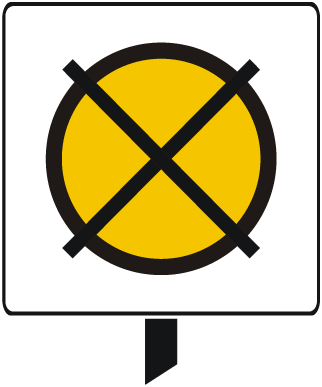 | Passing is permitted at such a speed, not exceeding 40 kilometers per hour, to be able to stop at any location behind this signal due to a possible obstruction or the lack of certainty that the devices situated between this signal and the next signal are functioning properly. |
| No. 333 Sign ‘End of secured area’ |  | Indication of the end of a secured area. |
| No. 318a Level crossing announcement sign | 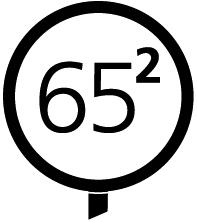 | Indication of the starting point of the level crossing announcement. The numbers on the sign indicate the kilometer and hectometer markings of the level crossing. |
| No. 318b Level crossing announcement sign |  | Indication of the starting point of the announcement for two consecutive level crossings. The numbers on the signs indicate the kilometer and hectometer markings of the level crossings, where the top number refers to the most distant level crossing. |
| No. 338 GSM-R changeover board |  | Manually switch GSM-R to the indicated national network. |
| No. 303 Blue light (stop signal) |  | Indication of the place where the front of a train must come to a standstill for proper service. Applies only to drivers of trains intended for the transport of passengers. |
| No. 304a Train length board | 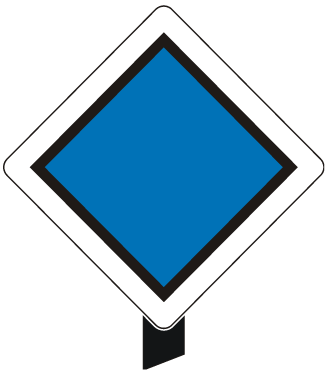 | Indication of the place where the front of a train must come to a standstill for proper service. Applies only to drivers of trains intended for the transport of passengers. |
| No. 304b Train length board | 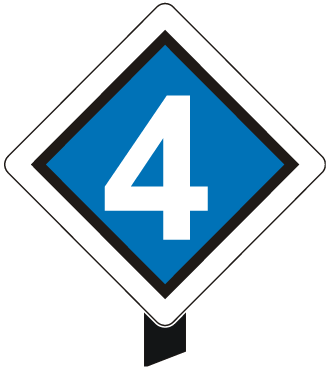 | Designation of the place where the front of a train, consisting of at most the number of rail vehicles indicated by the figure, must come to a standstill for proper operation of service. Applies only to drivers of trains intended for the transport of passengers. |
| No. 304c Train length board |  | Indication of the location where the front of a train must come to a standstill at platforms with platform phases for proper service operation. The top number applies to trains that can stop at both platform levels. The lower number applies to trains that must come to a complete stop along the second or subsequent platform phase because they are traversing the switches along the platform in the diverging position, or because the driver has received explicit instructions to do so. Applies only to drivers of trains intended for the transport of passengers. |
| No. 512a Blue flag/blue light |  | Indication of the place where the front of a train must come to a standstill for proper service. Applies only to drivers of passenger trains. |
| No. 226a Speed reduction sign for level crossing |  | Limit speed sufficiently to be able to stop before the indicated level crossing(s). |
| No. 226b White light with yellow area (level crossing signal) |  | Driving on the level crossing(s) is permitted. |
| No. 226c Extinguished white light with yellow area (level crossing signal) |  | Stop before the level crossing(s). |
| No. 360a Signal lights for track occupancy. Two fixed lights |  | Shunting permitted. |
| No. 360b Signal lights for track occupancy. Above: flashing white light, Below: white light | Indication of the distance between the leading rail vehicle and the end of the track that is less than 200 meters and more than 50 meters. | |
| No. 360c Signal lights for track occupancy. Two flashing white lights | Indication of the distance between the leading rail vehicle and the end of the track that is less than 50 meters. | |
| No. 370 Matrix board with signaling ‘anti-icing in service’ for an anti-icing system |  | When ice crystal lights up white: Anti-icing system is in operation. If the board is extinguished, the anti-icing system is not in operation. |
| No. 371 Matrix display with speed indication for an anti-icing system |  | When the speed indicator lights up white: The anti-icing system treats the train. The recommended speed for passing through the anti-icing system is 5 kilometers per hour. If the board is extinguished, continue the process in accordance with the instructions. |
| No. 372 Matrix board indicating the current speed of a train for an anti-icing system | 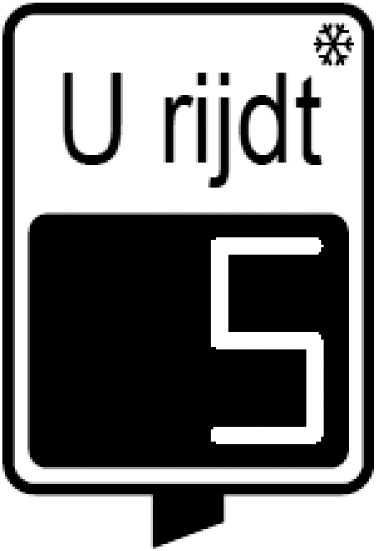 | The matrix displays the current speed in kilometers per hour. Explanation; The board is an aid for the train driver to drive the train through an anti-icing system at 5 kilometers per hour. If the board is extinguished, continue the process in accordance with the instructions. |
| No. 373 Train length board for anti-icing |  | Indication of the location where a train treated with anti-icing has left the anti-icing installation. The supplementary board indicates the length of the train in carriages. The train has left the anti-icing system if it consists of the number of rail vehicles indicated on the supplementary board. |
| No. 374 Matrix board with instruction for the operator for an anti-icing system |  | When the matrix board lights up, the driver must execute the instruction. In doing so, the driver takes into account the braking regulations applicable to the type of rolling stock. If the board is extinguished, continue the process in accordance with the instructions. |
13 Signals for ETCS
| No. / Signal | Image | Meaning |
|---|---|---|
| No. 336 ETCS cab signaling |  | ETCS cab signaling active. Stop trains without ETCS cab signaling as soon as possible and follow instructions from train dispatch. |
| No. 337 End of ETCS cab signaling | 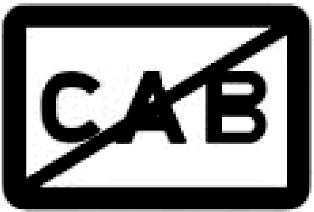 | End of ETCS cab signaling or ETCS driving permission. |
| No. 227b l/r/o Stop marking | Stop marking for trains operating under ETCS cab signaling or ETCS driving permission, or operating in SR mode. The dot points to the track for which the signal applies. | |
| No. 227a l/r White light: ETCS level 1 active, stopping point marking High or low placed white light | ETCS level 1 behind the signal. Passing permitted; thereafter follow ETCS cab signaling. The dot points to the track for which the signal applies. | |
| No. 227c l/r extinguished light: Stop marking | Stop marking for trains operating under ETCS cab signaling or ETCS driving permission or in SR mode. The dot points to the track for which the signal applies. | |
| No. 228 Stop marking |  | Stop marking for trains operating under ETCS cab signaling or a ETCS driving authorization. Trains without cab signaling: stop. |
14 Hand signals for rolling stock movement
| No. / Signal | Image | Meaning |
|---|---|---|
| No. 518a From the signalman | Day (gesture) – Night (white light) | Drive away from the signalman. |
| No. 519a To the signalman | Day (gesture) – Night (white light) | Drive towards the signalman. |
| No. 520a Repel | Day (gesture) – Night (white light) | Repel. |
| No. 521 Reduce speed | Day (gesture) – Night (white light) | Reduce speed and expect signal ‘Nr. 522a Stop’. |
| No. 522a Fuses | Day (gesture) – Night (white light)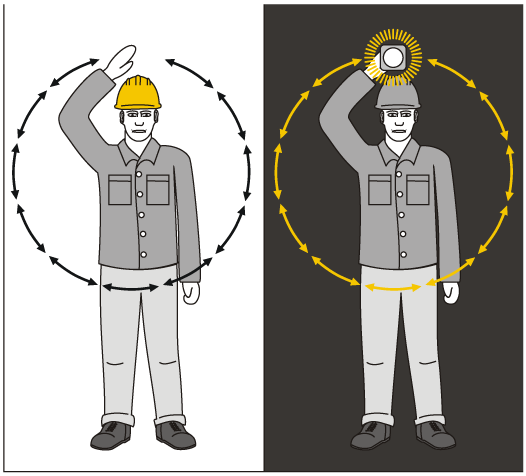 | Fuses. |
| No. 528a Additional printing/combine |  | Reprinting/combining. |
15 Danger signals
| No. / Signal | Image | Meaning |
|---|---|---|
| No. 605 Attention signal, a moderately long tone |  | Pay attention. |
| No. 606 Danger signal, at least five short tones | 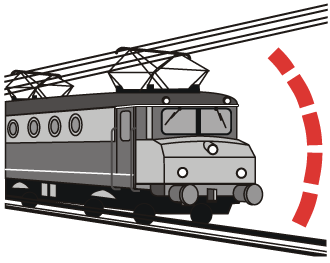 | There is danger. |
| No. 508 Danger signal with red flag/red light | Day (red flag) – Night (red light) | Stop due to danger. |
| No. 509 Danger signal with hand/white light | Day (gesture) – Night (white light) | Stop due to danger. |
16 Signals for personal safety
16.1 Fixed warning system for objects obstructing the view (wubo)
| No. / Signal | Image | Meaning |
|---|---|---|
| No. 708 WUBO Two white lights |  | No train is approaching from the direction of the object obstructing the view on the track to which the signal relates. |
| No. 709 WUBO Two alternating white lights |  | A train is approaching from the direction of the object obstructing the view on the track to which the signal refers. |
16.2 Fixed warning system on bridges (wibr)
| No. / Signal | Image | Meaning |
|---|---|---|
| No. 710 WIBR Two vertical, white lights per track |  | No train is approaching on the track of the bridge to which the signal refers. |
| No. 711 WIBR Two vertical, alternating white lights per track | 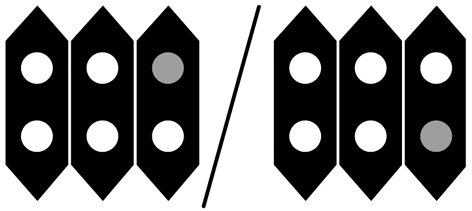 | A train is approaching on the track of the bridge to which the signal refers. |
16.3 Fixed warning system for service crossings (wido)
| No. / Signal | Image | Meaning |
|---|---|---|
| No. 720 WIDO Two white lights | 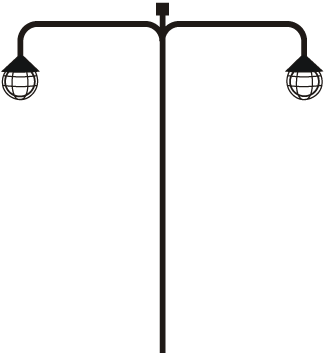 | No train is approaching on the track to which the signal refers. |
| No. 721 WIDO Two flashing white lights | A train is approaching on the track to which the signal refers. |
16.4 Fixed warning system in tunnels (white)
| No. / Signal | Image | Meaning |
|---|---|---|
| No. 722 WHITE Two vertical, white lights |  | No train is approaching on the track to which the signal refers. |
| No. 723 WHITE Two vertical, alternating white lights |  | A train is approaching on the track to which the signal refers. |
16.5 Sound and light signals during work activities
| No. / Signal | Image | Meaning |
|---|---|---|
| No. 614 Sound signal a moderately long tone | 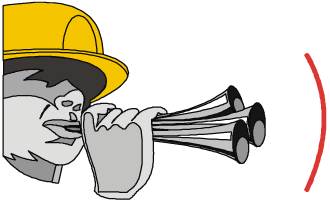 | Be careful due to an approaching train on the track next to which you are located. |
| No. 616 Sound signal at least five short tones |  | There is danger! |
| No. 617 Sound signal long, short and long tone | 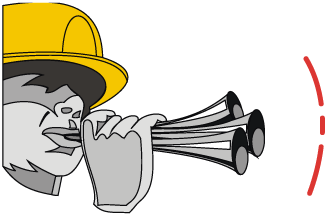 | Be careful due to an approaching train on the track you are on. |
| No. 618 Sound signal a short tone |  | The work can begin or be resumed. |
| No. 724a Orange rotating or strobe light and siren. | A train is approaching. | |
| No. 724b Non-working orange rotating or strobe light and siren. | No train is approaching. |
17 License Plates
| No. / Signal | Image | Meaning |
|---|---|---|
| Hectometer sign |  | Hectometer indication |
| Hectometer sign crossing | Hectometer indication of a crossing | |
| Signal number board |  | Indication of the signal number |
| Signal number boardwith V | 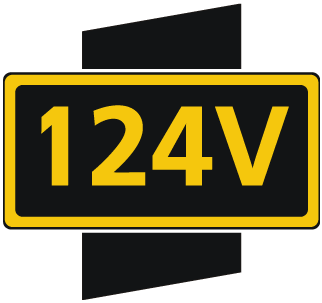 | Indication of the number of a distant signal. |
| Signal number plate with R |  | Indication of the number of a repeater signal No. 272 or 273 that is linked to a light signal with the same number. |
| Signal number plate with C |  | Indication of the number of a code change signal No. 330 that is linked to a light signal with the same number. |
| Added signal number plate | 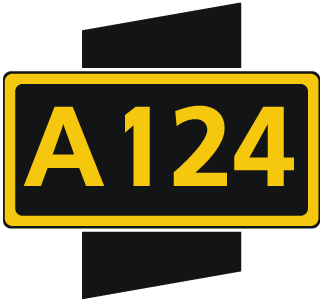 | Indication of a signal light without original number. |
| Arrow sign |  | Indication of the track for which the signal is intended. Indication of the tracks for which the signal is intended. |
| Change number plate |  | Indication of the number of a switch. |
| Stool cabinet board |  | Designation of a cabinet containing a changeover crank. |
| Telephone cabinet board |  | Designation of a cabinet containing a telephone used to contact the train dispatcher directly. |
| Sign ‘End of footpath’ |  | Indication of the end of a walkway. |
18 Markings
| No. / Signal | Image | Meaning |
|---|---|---|
| White/black area on counterweight, changeover chair or changeover indicator |  | Indication of the normal position of a locally operated switch, if the white area is up. After driving, the switch is returned to the normal position. |
| Free beam |  | Indication of the outer limit on a track where rail vehicles can be positioned without coming into contact with rail vehicles on the adjacent track. |
19 Locally occurring signals
19.1 Amsterdam
| No. / Signal | Image | Meaning |
|---|---|---|
| No. 215b Red with yellow triangle |  | Stop before the signal. |
| No. 223 Low-placed white light with a square black board with a yellow triangle with the point downwards |  | When approaching the signal: the signal is meaningless. Upon departure from a standstill: drive permitted at such a speed, not exceeding 40 kilometers per hour, in order to be able to stop at any location behind this signal where there is an obstruction to further driving. |
19.2 Venlo
| No. / Signal | Image | Meaning |
|---|---|---|
| No. 301a E-Traction Stop Sign | 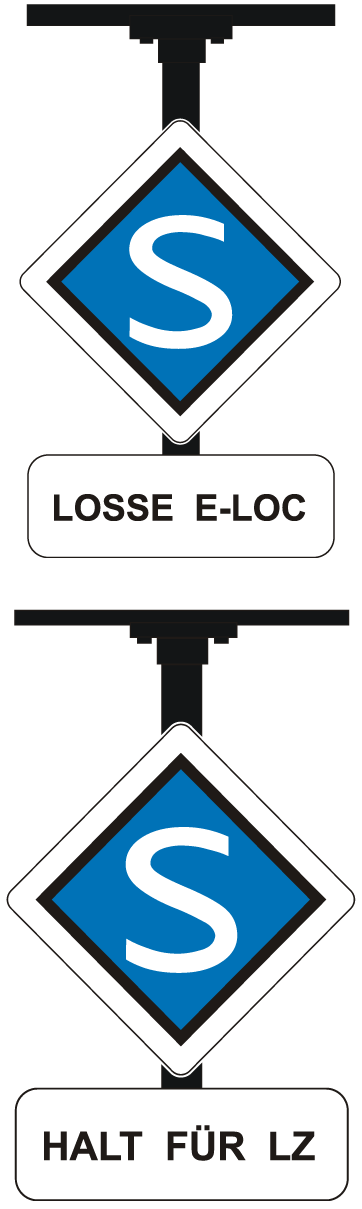 | Stop before the sign. Applies only to operators of standalone electric locomotives that are not suitable for 15.000 V AC voltage. Applies only to operators of standalone electric locomotives that are not suitable for 1.500 V direct current. |
| No. 224 White light at extinguished signal with VS sign |  | Driving is permitted at a speed of no more than 40 kilometers per hour, if the driver is in possession of a valid Wrong Track instruction for the track in question. |
19.3 Kijfhoek
| No. / Signal | Image | Meaning |
|---|---|---|
| No. 270a Hill access signal chevron up |  | Driving over the shunting hump to the sorting tracks is permitted. |
| No. 270b Hill access signal chevron down |  | Pushing rail vehicles to be humped is permitted. It is not permitted to pass the signal with the locomotive. |
| No. 270c Hill approach signal red bar |  | Passing the signal is only permitted after permission from the train dispatcher. |
19.4 Dutch – Belgian track sections
| No. / Signal | Image | Meaning |
|---|---|---|
| No. 349 Sign ‘Signals to the right of track’ |  | Indication of the placement of the signals on the right side of the track for which they are intended. |
| No. 349a Belgian arrow sign |  | Indication of the track for which the signal is intended. |
19.5 Various track sections
| No. / Signal | Image | Meaning |
|---|---|---|
| No. 306b Switch-off board |  | Switching off traction current. Applies only to drivers of trains equipped with pantographs, who have been designated by the railway undertaking concerned. |
| No. 307b Switchboard |  | Switching on traction current is permitted. If a supplementary sign is fitted, the traction current may only be switched on if the train consists of no more than the number of rail vehicles indicated on the supplementary sign. Applies only to drivers of trains equipped with pantographs, who are designated by the railway undertaking concerned. |
| No. 308b pantographs down |  | Lower the pantographs within three hundred meters. Applies only to drivers of trains designated by the railway undertaking concerned. |
| No. 309b pantographs down |  | The pantographs must be lowered. Applies only to drivers of trains designated by the railway undertaking concerned. |
| No. 310b pantographs on | 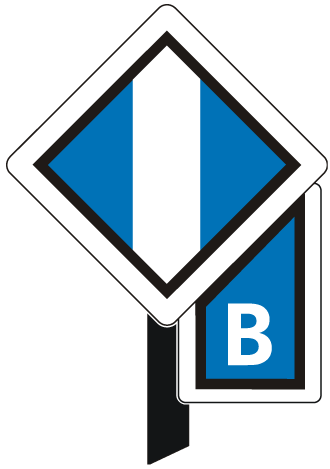 | Permission to raise the pantographs. Applies only to train drivers designated by the railway undertaking concerned. |
19.6 Track sections Tilburg – ‘s Hertogenbosch and Boxtel – Eindhoven
| No. / Signal | Image | Meaning |
|---|---|---|
| No. 725a Extinguished light |  | The signal gives no order. |
| No. 725b Flashing red light | Indication of the activation of the work zone switch for the track to which the work zone lamp relates. |
19.7 Amersfoort
| No. / Signal | Image | Meaning |
|---|---|---|
| No. 268a/b Hills forbidden a. |  | It is not permitted to push rail vehicles to or over the hill. |
| b. |  | |
| No. 269a/b Hills allowed a. | 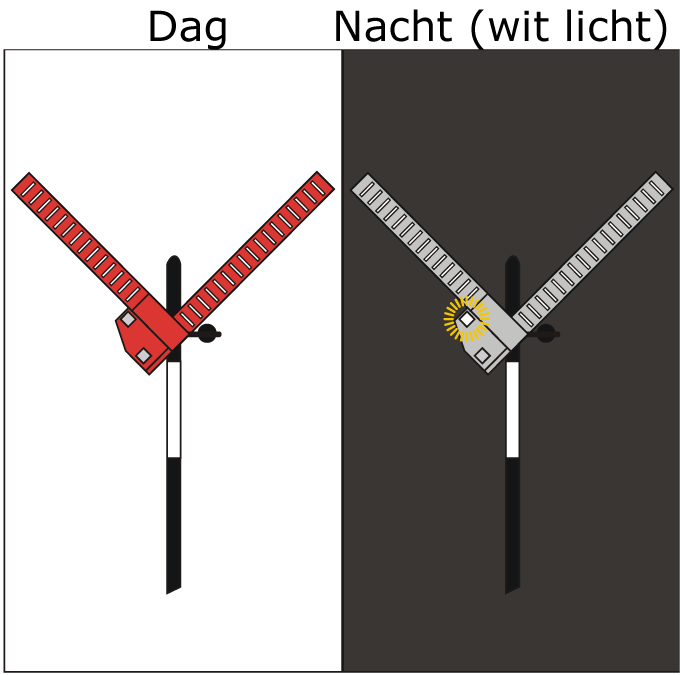 | Pushing rail vehicles to or over the hill is permitted. |
| b. |  |
20 Signals on track out of service
| No. / Signal | Image | Meaning |
|---|---|---|
| No. 725b Flashing red light (high and low) | For work trains: Stop before the signal. For personal safety: The work zone switch for the work zone located prior to the relevant signal has been activated. |